• The Learning Never Stops
  • Information
    • Subjects
    • Year Plan
    • Evaluation
  • Assessment
    • Criteria Sheets
    • Behaviour Criteria C-Charts
  • Gallery
    • Photos
    • Sports
    • Animations
    • Videos
WELCOME TO MR FISHER'S CLASS

math Inquiry: How can we compare Fractions?

11/21/2018

 
Picture
Click the picture to see a smashing video!
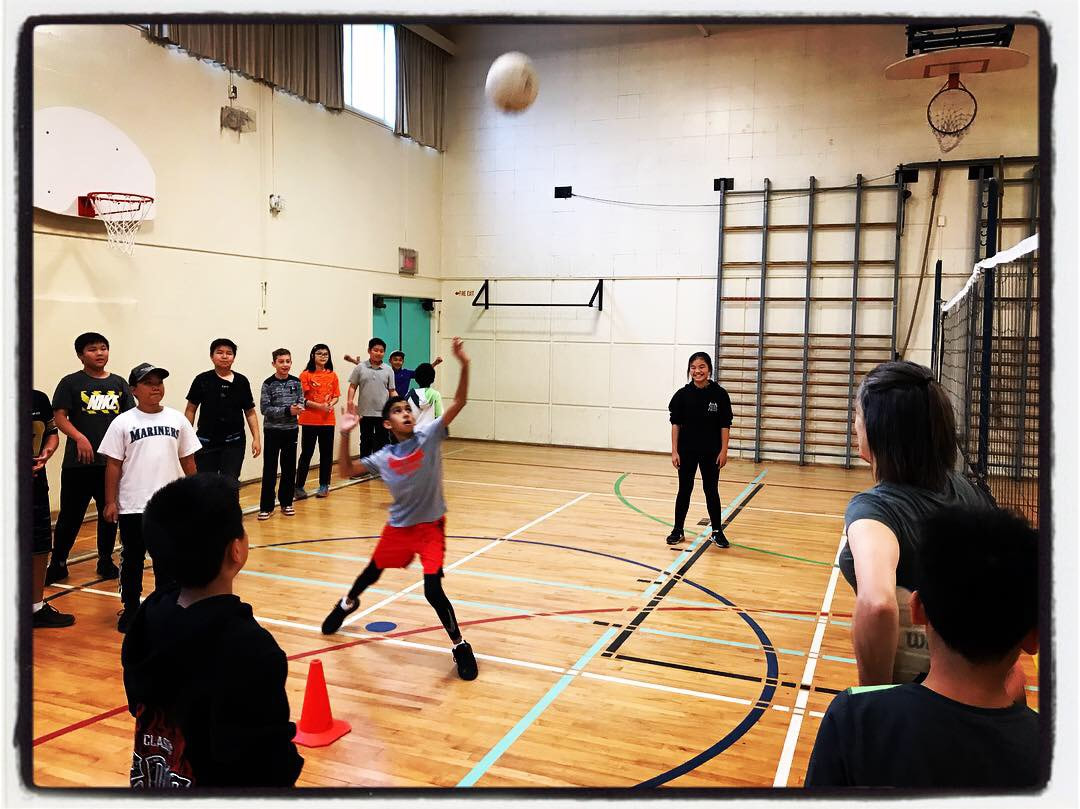
In our volleyball unit we practiced doing overhand smashes. Students really enjoyed hitting the ball hard. It felt good to hear the slap on the ball and see it rocketing away. We will soon be incorporating all  the skills we have been practicing into a game.  After more 1 or 1 writing conferences we had music and then did our first math inquiry. Students were posed the question: How can we compare fractions? They were challenged to find as many strategies as possible to order and compare fractions. It was great to see the collaboration and different thinking. In the afternoon, we had an extra PE period and then started our first French project. We will be learning some basic phrases that can be used in the classroom for simple  daily requests and conversations.
1) Homework and Reminders:
  • WEday tomorrow. Attendees be at school at 7:45 sharp!
  • Home reading
  • French poster plan
  • Any unfinished math from the week
2) Post A Response:
  • Today Ms. Chohan spent a bunch of time responding to your PAR's from yesterday.
  • Copy and paste your PAR from yesterday along with her feedback into your post today. 
  • Then reply to your cut and pasted post and answer any questions or make any revisions needed based on the feedback you received
  • If you did receive any feedback from myself, Ms.Chohan or any other student yesterday please post here and either myself, Ms. Chohan or another student will give you some
  • If you already reviewed feedback yesterday and made revisions please post copy and paste your original post the feedback and the revised post here!

jedd
11/21/2018 05:57:40 pm

1

Jedd
11/21/2018 09:54:52 pm

Testing the best stratagy for picing up beans. Numbers flyng through my face. aha!!

So today we did a simulation of natural selection.
what we were sopused to do was pick up as many white beans as we can in 45 seconds. We had to use diffirent utensils like spoons forks, chopsticks and knifes.

so we looked to see which group would thrive if they were predator's
(their was also a average and if you were below you would have died.) if their was two people they would have reproduce.

after this thing that we did I think that natural selection is based on wether you are fit to survive or have the skills to at least.
Reply
V1

Today we did a simulation of natural selection.
we had 4 groups or in other words species (forks, spoons, chopsticks and knives).

Rules are that you have to get as much white beans as you can in 45 seconds. White beans must be on the table and you must have your utensils on each hand (that might have made it harder for the chopsticks species.) based on a formula for a average score if you were below the average score then you go extinct. if you have 2 people to reproduce then one person will join your group (species).

It teach's us that some animals will have a much higher chance of surviving based o their skill or evolution of limbs or body parts.

jedd
11/21/2018 09:56:26 pm

/\
|
v2

Nathan
11/21/2018 05:58:17 pm

2

Nathan
11/21/2018 06:23:41 pm

Today we did a simulation of what natural selection might look like. The simulation was that every body had either a fork, spoon, knife, or chopsticks. There were a pile of beans and in a certain amount of time we had to see how many we can get our tray. Each hand had to have an utensil. The end result of this were that the chopsticks were eliminated first round and the rest survived the other rounds. I believe the reason why the chopsticks were eliminated in the first round were that it was very hard to get the beans with the chopsticks. In the real world not all organisms can eat food. Like the chopsticks an organism can have difficulty eating and if an organism doesn't eat it can die. An example of this are birds, birds don't use their feet or wings to eat they use their mouth. If the birds didn't have a mouth would they still be able to eat? Also if you had a more than two people surviving then their utensil can reproduce to get a new utensil. Our prediction on who was going to last the longest i think was the spoon because of how much it was increasing. This activity showed me what natural selection actually means. I learned during this activity that natural selection is when creature reproduce and if there can survive then they will I've but if they cant then they will be eaten by other animals and if there aren't more than one animal then the animal species could go extinct.

V.2

Nathan
11/21/2018 06:24:27 pm

Feedback from Mr.Fisher


@ Nathan

Why were the chop stick eliminated?

How does this connect an organism in the world? Can you give an example?

Nathan
11/21/2018 06:24:51 pm

Up top is the revised version.

Len
11/21/2018 05:59:54 pm

Third

Kaden
11/21/2018 06:00:36 pm

4th

Jorge
11/21/2018 06:02:22 pm

5

Jorge
11/21/2018 06:40:33 pm

What are we going to do while the rest of the class is going to WEday?

Mr. Fisher
11/21/2018 06:54:12 pm

@Jorge

Keep learning!!!!! Whoot whoot!

Nathan
11/21/2018 06:57:26 pm

You guys are going to have a big learning party.

Nathan
11/21/2018 06:58:12 pm

"Everyday is a party, a learning party!" by Nathan

Jorge
11/21/2018 07:10:16 pm

Today's simulation was about natural selection. We used spoons, forks, knives and chopsticks. The simulation was to see which type of utensil worked best for collecting food. By the end of the simulation the most useful utensil were the spoon and the fork. This is a great example of natural selection because some utensil didn't work as well as the others. After this activity I think that the theory of natural selection is definitely true and proved.


vincent qi11/20/2018 08:54:16 pm
You should add more to your paragraphs. Also remember to add "s" after if you are using plural nouns.


Today's PAR

Today's simulation was about natural selection. We used spoons, forks, knives and chopsticks. The simulation was to see which type of utensil worked best for collecting food. Each utensil was like an animal species. The most effective ones were like the best consumers.

By the end of the simulation the most useful utensils were the spoons and the forks. This is a great example of natural selection because some utensil didn't work as well as the others. After this activity I think that the theory of natural selection is definitely true and proved.

Kaden
11/21/2018 07:27:29 pm

yes you guys will have a learning party with MR. FISHER!!!!!!!!!

Jorge
11/21/2018 08:15:48 pm

yay

Owen
11/21/2018 06:02:38 pm

Hi'

Owen
11/21/2018 06:03:34 pm

So sad........
i wanna go to WE DAY tooo

Kaden
11/21/2018 06:05:31 pm

Today, Ms. Chohan planned an activity for us about teaching us natural selection. She placed a bunch of tiny white beans on our desks and gave us a Petri dish. At random, we were given either spoons, forks, knives, or chopsticks. 2 utensils, one in each hand.

The four different utensils represented something that we used to eat with, and the beans represented the food. The Petri dish represented our mouths. We started with 6 for each. 6 forks, 6 spoons, 6 knives and of course 6 chopsticks. So we were off, Ms. Chohan counted 3,2,1 and we grabbed our utensils and tried to grab the beans.

Once the timer was up, we counted. The people who didn’t have utensils helped Ms. Chohan with the calculations and such. They collected everyone’s data and made an average. For the first “generation” it was 10.

All the chopsticks were extinct the first round, the knives had 5 people left, and could reproduce into 7 people. Same with the forks. The spoons got 6, and could reproduce to 9.

Second generation starts with 7 knives, 7 forks, and 9 spoons. It ends, with the average being 30.(I think?) It ended with 2 knives, 4 forks, and 4 spoons. Reproducing, it was 4 knives, 6 forks and 6 spoons.

Overall, after this activity it helped me a bit on understanding natural selection. It shows that if a certain species can’t change, or don’t have the right things to eat / survive, they’ll be “taken” out, or go extinct. Or, they’ll change and be able to adapt to their climate. the result for the simulation is that we had to see which utensil is extinct and which are still surviving. the theory of the Natural selection explains it because the theory of the natural selection is the natural selection of different survival and reproduction of individuals due to different characteristic of a population over the generations. In conclusion of the natural selection is that the theory of the Natural selection explains it because the theory of the natural selection is the natural selection of different survival and reproduction of individuals due to different characteristic of a population over the generations.

Kaden
11/21/2018 06:59:38 pm

From Ms. Chohan

Ester
11/21/2018 06:35:00 pm

Today we did a simulation to better understated what natural selection is. There were to base populations, in this instance food utensils such as, forks, spoon, knives and chopsticks. people were assigned to a utensil and used that utensil on both hands to simulate different body parts on animals to try to feed themselves. The utensils will act as a claw to try grab white beans into a tray to find out if that body part (utensil in this case) can help the animal (the person holding the utensils) eat food and survive.

People tried to transfer beans into the tray in 45 seconds and trying to get as many beans as the could one bean at a time. Then, two people went around and collected the number of beans the have acquired and averaged it out with this formula: forks+spoon+chopsticks+knives = (a)/2 = (b). Then, they took the utensils from people who has acquired beans lower then the average score. This acts like nature taking out the animals that are the weakest. Then, we did it again with the same process. At the end one population was extinct.

After that activity, natural selection is basic survival skills to me. When a variation of a organism doesn't have the skills or body form to help them survive, nature just takes them out.This would actually help reproduce better, suitable off springs. With better off springs, the better the specific specie would live for generations to generations. Thus, leading to less of a possibility of extinction.

Ester
11/21/2018 06:41:05 pm

From Ms. Chohan-

@Ester. Great job explaining the natural selection activity, and how it was decided who died and who went on.
It looks like I could have explained the equation better. You have the right idea. We were looking for the average amount of food collected.
The equation in its simplest form is:
All the food collected / number of students collecting food
Thanks for thinking to add that detail

taya
11/21/2018 06:51:53 pm

A prey, a soft furry prey. His glowing dark eyes and furry brown face. A long soft tail following his tiny body, his listening ears and the dark stripes on his fur, waiting, waiting for food. The radiant grass reflects on the window. I wait, I wait some more. And then approach him.


My room was a dark space, the carpet floors filled with clothes and tables filed with paper. My knotted hair falls on my face as I am berried in the screen. the world fades around me. It's so peaceful, you can hear a pin drop. I breath in the heavy air, my eyes began to close. A loud sound disturbs my peace. My eyes go dark, a wave of fear scares me. Within a second I start running. I lose balance and tremble down but the staircase rail helps me up. My oblivious family crowded between a window. There fascinated stares catch my attention. Outside there was a soft squirrel staring at them. He was soft and brown, He looked quit young. His dark brown gleaming curious eyes stared inside our house. "Bilel!" yelled my baby brother. His sweet smile expanded as h shouted with joy "Bilel!" He was a little squirrel from the outside, he didn't know what this "big" building was, a whole new world inside this house and he was staring from outside. My mom interrupted my thoughts to suggest to feed the squirrel, and so we did.


Sarah
11/21/2018 08:25:23 pm

This is grate writing Taya! You should read it and make corrections before posting.

Matthew
11/21/2018 06:57:41 pm

Standard Version
The simulation that we did involved forks, spoons, knives and chopsticks. We had to get as many beans as we could and put them into our separate bowl and we had to get the most in 45 seconds. WE would then add up all the beans collected over 28 ( the people in the class.) Then we would find the average and anyone below the average would give their utensils away. For the survivors, every pair would reproduce one offspring and we would see which utensil has the most chance to survive. The results: Forks were the most successful and spoons were right behind. Knives were third and chopsticks were extinct. This helped us understand natural selection more better as we saw the utensils that had less of a chance living go extinct and utensils that had higher chances to thrive were making offspring. This proves that nature choses certain animals to benefit the species.
Feedback
Matthew, I do not think that "more better" are good words to use. Maybe try "better" to describe what you are trying to say. I am not sure if you answered the question "After completing this activity, what does the theory of natural selection mean to you?". Other than that, nice job!

Revised Version
The simulation that we did involved forks, spoons, knives and chopsticks. We had to get as many beans as we could and put them into our separate bowl and we had to get the most in 45 seconds. WE would then add up all the beans collected over 28 ( the people in the class.) Then we would find the average and anyone below the average would give their utensils away. For the survivors, every pair would reproduce one offspring and we would see which utensil has the most chance to survive. The results: Forks were the most successful and spoons were right behind. Knives were third and chopsticks were extinct. This helped us understand natural selection better as we saw the utensils that had less of a chance living go extinct and utensils that had higher chances to thrive were making offspring. This proves that nature choses certain animals to benefit the species. This means a lot as I now know why Nature choses certain species of an animal because a certain species could help benefit the whole thing. That's why I know have a better understanding of it, now

Mr. Fisher
11/21/2018 08:18:33 pm

@ Matthew

I really like how you set this up with the standard and revised version! Great Idea. It is just missing the feedback:)

Vivian
11/21/2018 07:06:38 pm

Thank you Ester for the feedback, here is the revised version.

This morning, Ms.Chohan taught the class what natural selection is like.Using the examples or forks, spoons, knifes and chopsticks.

We were all given a utensil, it’s either a spoon,fork,knife or chopsticks. We were all gathered at a table and try to get as much beans as we can on the table. The rule is that you have to have 2 of the same utensils on both of your hands and can only take one bean at a time with the utensils. We each get 45sec. to get the beans in our dish and then count it after. Sadly the chopsticks went extinct, because they collected the least amount of beans out of the other utensils. The rest of the surviving groups “reproduced” new children/utensils.

But at last forks and spoon were tied at the end leaving 2 knifes at the end. We can’t go back in time to see natural selection, but this is another way to see it.

During this lesson I learned that if a organism can’t get the source it needs to survive then they die or become extinct.

Us humans have the smartest minds, scientists find new things to help us survive and doctors cure illnesses. So that’s why we have been here for so long!

Vivian
11/21/2018 07:08:10 pm

Some spelling mistakes here and there and please try to use multiple paragraph to make it easier to understand. Other than that, excellent job!

This was Feedback from Ester and the paragraph up top is the revised version

Joseph
11/21/2018 07:10:34 pm

Original:
I poked the spoons around the bean, and silently swore when I stabbed it too hard and it shot across the table. Argh!

We did an interesting simulation today that represented Darwin's theory of evolution in its simplest form. In short, we were given some beans and four types of utensils to grab them as best as possible. After each round, we calculated the average amount of beans; each person who managed to get more than the average continued on (with their utensils) to the next round. In the end, spoons and forks tied with knives following, while chopsticks became extinct.

This could be interpreted as animals having ways to get food sources using different ways, and each generation the individuals that were not able to get sufficient food died off. In this way, it is ensured that there will be more individuals that can get enough food easier in the next generation. This is the theory of natural selection in its simplest form.

Even though I already knew about the theory of natural selection, this gave me a few new insights. Obviously, it helped me understand natural selection more clearly by having a reflection of it in real life. More importantly, I think that Natural Selection actually influences our lives in a very strange way. For instance, technology evolves in a manner similar to Natural Selection. It starts with the technology that started it all, and other offspring continue from it. The successful functions continue on while the less popular functions are replaced.

To conclude, I think that Natural Selection doesn't only apply to nature - it applies to real life as well, in ways you might not think of.

Edited Version (includes answers to questions posed by Mr. Fisher)
I poked the spoons around the bean, and silently swore when I stabbed it too hard and it shot across the table. Argh!

We did an interesting simulation today that represented Darwin's theory of evolution in its simplest form. In short, we were given some beans and four types of utensils to grab them as best as possible. After each round, we calculated the average amount of beans; each person who managed to get more than the average continued on (with their utensils) to the next round. In the end, spoons and forks tied with knives following, while chopsticks became extinct.

This could be interpreted as animals having ways to get food sources using different ways, and each generation the individuals that were not able to get sufficient food died off. In this way, it is ensured that there will be more individuals that can get enough food easier in the next generation. This is the theory of natural selection in its simplest form.

Even though I already knew about the theory of natural selection, this gave me a few new insights. Obviously, it helped me understand natural selection more clearly by having a reflection of it in real life. More importantly, I think that Natural Selection actually influences our lives in a very strange way. For instance, technology evolves in a manner similar to Natural Selection. It starts with the technology that started it all, and other offspring continue from it. The successful functions continue on while the less popular functions are replaced.
To illustrate this, I thought of the iPhone. That would be the last common ancestor for modern phones after that, while the features would be its “appendages”. Food would be the money gained from the sales of the phone; and whether it “lived or died” would depend on whether it made enough money to offset all costs in the production of making the iPhone a reality.
For instance, the iPhone introduced several revolutionary features to the mobile device market, such as the home button and scrolling (yes, scrolling wasn’t in phones before then!). These “appendages” continued to this day and survived through multiple generations of phones. However, “appendages” such as the headphone jack slowly were phased out over time.

To conclude, I think that Natural Selection doesn't only apply to nature - it applies to real life as well in - I will admit - a limited form. But nonetheless I believe that this analogy was close enough and interesting enough to share.

-Joseph

Owen
11/21/2018 07:12:53 pm

Well, i was very sad that my chopstick family die at FIRST. i thought i can get at least, like 20.
guess what i got 7...... BUT
I HAVE MY REVENGE.
So how this fun simulation work.... We have 4 tools for us to pick the white bean up, and all of us will have a plate( A MOTH......) and you have to hold your tool with two hand, and pick the bean up from the table, For the tools, WE have: fork ,spoon, chopstick( eliminated by FORK) and knife.
After Jorge and Ester hand out the tool to everyone, we will get the sheet to record the population of the 4 tool, after that the game started.
i thought it was super easy, and i told Ms Chohan that i am gonna get like a lot of bean.( actually 7 is a lot,cough cough, at least Oven agreed with me) at the first round all the chopstick got eliminated by the fork and spoon. ( :( :( :( :( )
okay fine... After that at the second game i got switch to the knife, and the second game, in our group they just moved all the beans from the center to my side( i think is because some people on the side can not reach,) ( But why do you move it right beside your moth?) QUITE OVEN.
After two game we then found the average of the population then we compare them. the fork is so successful.
And after we collated the average, we can reproduce, and get one more fork or spoon, after we start thinking that what will happen next .
so why this is kinda like a natural selection, is because the natural select some animal to eat the other, some animal might be easier to eat other.
like the spoon will be hard to pick look stick, and the fork was very easy.

Mountain
11/21/2018 07:18:51 pm

Today Ms. Chohan and the class did a simulation of what natural selection looks like.

What we did was that every body had either a fork, spoon, knife, or chopsticks. There were a pile of beans on the middle of the table and we had 45 seconds t get as many beans into our pantry try as possible. Each hand had to have an utensil.

The result were that the chopsticks went extinct because they collected the last amount of beans.If you had a more than two people surviving then they can "produce" to get a new utensils. At the end the spoons had the most even though I think that at the end forks will eventually outlast the spoons. I believe this because as we say the spoon collected so many beans that the average was raised dramatically higher, therefore the weak of both their species and others will perish. As we saw the average was 30, most people did not collect more than 30 therefore the spoons pretty much nearly wiped out there own species by the dramatic increase of success. This can happen with any other species as well.

This activity showed us what natural selection might of actually been like. I learned during this activity that natural selection is the creature with more offspring and are better adapted to the environment or tasks will survive. Unfortunately this also applies to human society.

What the theory of natural selection is that it is always a struggle for animals to survive because only the strongest, smartest and most well adapted animals will survive.

"Survival of the fittest"
- Charles Darwin

Mountain
11/21/2018 07:21:59 pm

Ms. Chohan11/21/2018 11:28:26 am
@Mountain

Good revision. I wonder what your theory is for the forks surviving?

Do you have an example of an animal that may have adapted over time to help it survive?

Thank you for the feedback Ms. Chohan! Above is the revised version.

Len
11/21/2018 07:26:49 pm

Today we did a simulation to manipulate natural selection to see and learn how it works. To do the simulation there are forks, spoons, knives and chopsticks. We each get two of either 4 and you have to collect peas like your an animal trying to eat. So for example I was given two knives and you have to put each one in one hand and to make it harder/challenging you can only eat/collect one at a time. For each utensil there 6 people with them. We get 45 seconds to collect as much peas as you can then after few selected people write down how many you got. Then they calculate the average number of peas collected. Who ever did not make the score will be "extinct" But if you did survive you live. If only one person survives it can not reproduce and make offspring. But if 2 people survive they can reproduce and make offspring to expand their population. To live you have to adapt which is natural selection. This simulation explains natural selection because the successful people with there utensils that are useful to pick up peas adapt and survive to make offspring. The non surviving utensils can barely survive because they're not adapting . this is natural selection.


I did not get feedback.

Ms.Chohan
11/21/2018 08:13:47 pm

@Len
Good explanation of the task, and your understanding.
Do you think you could make a connection to natural selection and an organism in the world?
It would also be nice to have some paragraphs.

Len
11/21/2018 08:33:44 pm

Today we did a simulation to manipulate natural selection to see and learn how it works. To do the simulation there are forks, spoons, knives and chopsticks. We each get two of either 4 and you have to collect peas like your an animal trying to eat. So for example I was given two knives and you have to put each one in one hand and to make it harder/challenging you can only eat/collect one at a time. For each utensil there 6 people with them. We get 45 seconds to collect as much peas as you can then after few selected people write down how many you got. Then they calculate the average number of peas collected. Who ever did not make the score will be "extinct" But if you did survive you live. If only one person survives it can not reproduce and make offspring. But if 2 people survive they can reproduce and make offspring to expand their population. To live you have to adapt which is natural selection.

This simulation explains natural selection because the successful people with there utensils that are useful to pick up peas adapt and survive to make offspring. The non surviving utensils can barely survive because they're not adapting. I can make a connection to natural selection and that is the gray tree frog and the green tree frog. Both in southern United States. These frogs seem to to be ecologically equivalent. Both eat insects, live off the ground on vegetation and lay their eggs in small pools. But why isn't there just one species? Why is this a connection to natural selection? Here's why. Treefrogs are sometimes eaten by snakes and birds. Gray treefrogs blend well in dark wooded areas on tree bark and Green treefrogs blend in well with green vegetation found in marshes and swamps. A Green treefrog on the bark of a tree is easier for a predator to find, compared to a Green reefrog on a green leaf. So, Green treefrogs that go into habitats where they are not camouflaged are more likely to be eaten by predators. Since treefrogs that have been eaten do not live to have any more baby treefrogs, natural selection has favored treefrogs that live in habitats in which they are more camouflaged. This is natural selection.

Len
11/21/2018 08:34:27 pm

Today we did a simulation to manipulate natural selection to see and learn how it works. To do the simulation there are forks, spoons, knives and chopsticks. We each get two of either 4 and you have to collect peas like your an animal trying to eat. So for example I was given two knives and you have to put each one in one hand and to make it harder/challenging you can only eat/collect one at a time. For each utensil there 6 people with them. We get 45 seconds to collect as much peas as you can then after few selected people write down how many you got. Then they calculate the average number of peas collected. Who ever did not make the score will be "extinct" But if you did survive you live. If only one person survives it can not reproduce and make offspring. But if 2 people survive they can reproduce and make offspring to expand their population. To live you have to adapt which is natural selection.

This simulation explains natural selection because the successful people with there utensils that are useful to pick up peas adapt and survive to make offspring. The non surviving utensils can barely survive because they're not adapting.

I can make a connection to natural selection and that is the gray tree frog and the green tree frog. Both in southern United States. These frogs seem to to be ecologically equivalent. Both eat insects, live off the ground on vegetation and lay their eggs in small pools. But why isn't there just one species? Why is this a connection to natural selection? Here's why. Treefrogs are sometimes eaten by snakes and birds. Gray treefrogs blend well in dark wooded areas on tree bark and Green treefrogs blend in well with green vegetation found in marshes and swamps. A Green treefrog on the bark of a tree is easier for a predator to find, compared to a Green reefrog on a green leaf. So, Green treefrogs that go into habitats where they are not camouflaged are more likely to be eaten by predators. Since treefrogs that have been eaten do not live to have any more baby treefrogs, natural selection has favored treefrogs that live in habitats in which they are more camouflaged. This is natural selection.

Mr. Fisher
11/21/2018 09:08:03 pm

@ Len

Great Revising based on Ms. Chohan's feedback. YES!!!! The principles of learning in action.....yahooooo!!!!!!

Annabelle
11/21/2018 07:33:48 pm

I slowly picked the bean with chopsticks and dropped into the petri dish. The alarm went off and I put my chopsticks down.

Ms. Chohan put lots of beans on the table as we all waited eagerly to do a simulation of natural selection. She handed out 6 pairs of spoons, 6 pairs of chopsticks,6 pairs of forks and 6 pairs of knives.
Each student received a pair of utensil, a petri dish and a paper to record. The students who didn't get a utensil helped Ms. Chohan record data. The utensils simulated organisms that eat prey. The beans were the prey for the organisms. The rules were simple, no cheating, 1 utensil in each hand only, you can only pick up one bean at a time, and have fun. We had forty-five to pick as many beans and put them in our dish as we could. Unfortunately, after the first round/generation, all students using chopsticks got eliminated because they didn't pick enough beans to feed themselves. The chopstick population got extinct. There were 5 forks, 5 knives, and 6 spoons that survived after the first round. To make this simulation more realistic, every two utensils that survived meant an offspring. At the end of round two, Spoons and forks had the same population and knives were behind.

This simulation explained that only the organisms suited for the environment get to live. The other organisms will have a hard time surviving. Students using chopsticks struggled when picking up the beans as for the people using spoons, they found picking beans very easy. I realized that animals not only have to be adapted to their habitat but to also be good at finding food (and eating it).

After this activity, my understanding of the theory has not changed, but my understanding of the theory of natural selection has deepened.

Feedback!
Nice job overall!
However, I feel that you went too far with the explanation of what the simulation was and too little with your own thinking. If I were you, I would cut down on the explanation of the simulation and more about how your thinking about natural selection has changed.
Nothing else to add though, great job!

Great job Annabelle!
In your conclusion, maybe add detail on how your understanding has deepended, and what changed.


Revised copy

I slowly picked the bean with chopsticks and dropped into the petri dish. The alarm went off and I put my chopsticks down.

Ms. Chohan put lots of beans on the table as well as 6 pairs of spoons, 6 pairs of chopsticks,6 pairs of forks and 6 pairs of knives.
Each student received a pair of utensil, a petri dish and a paper to record. The students who didn't get a utensil helped Ms. Chohan record data. The utensils simulated organisms that eat prey. The beans were the prey for the organisms. The rules were simple, no cheating, 1 utensil in each hand only, you can only pick up one bean at a time, and have fun. We had forty-five to pick as many beans and put them in our dish as we could. Unfortunately, after the first round/generation, all students using chopsticks got eliminated because they didn't pick enough beans to feed themselves. There were 5 forks, 5 knives, and 6 spoons that survived after the first round. To make this simulation more realistic, every two utensils that survived meant an offspring. At the end of round two, Spoons and forks had the same population and knives were behind.

This simulation explained that only the organisms suited for the environment get to live. The other organisms will have a hard time surviving in its environment. Students using chopsticks struggled when picking up the beans as for the people using spoons, they found picking beans very easy. I realized that animals not only have to be adapted to their habitat but to also be good at finding food (and eating it).

After this activity, my understanding of the theory has not changed, but my understanding of the theory of natural selection has deepened. I can explain this theory better than before and have a clearer picture of natural selection in my head.

Sophie
11/21/2018 07:57:14 pm

(I got no feedback)

Today, Ms. Chohan planned an activity for us about teaching us natural selection. She placed a bunch of tiny white beans on our desks and gave us a Petri dish. At random, we were given either spoons, forks, knives, or chopsticks. 2 utensils, one in each hand.

The four different utensils represented something that we used to eat with, and the beans represented the food. The Petri dish represented our mouths. We started with 6 for each. 6 forks, 6 spoons, 6 knives and of course 6 chopsticks. So we were off, Ms. Chohan counted 3,2,1 and we grabbed our utensils and tried to grab the beans.

Once the timer was up, we counted. The people who didn’t have utensils helped Ms. Chohan with the calculations and such. They collected everyone’s data and made an average. For the first “generation” it was 10.

All the chopsticks were extinct the first round, the knives had 5 people left, and could reproduce into 7 people. Same with the forks. The spoons got 6, and could reproduce to 9.

Second generation starts with 7 knives, 7 forks, and 9 spoons. It ends, with the average being 30.(I think?) It ended with 2 knives, 4 forks, and 4 spoons. Reproducing, it was 4 knives, 6 forks and 6 spoons.

Overall, after this activity it helped me a bit on understanding natural selection. It shows that if a certain species can’t change, or don’t have the right things to eat / survive, they’ll be “taken” out, or go extinct. Or, they’ll change and be able to adapt to their climate.

Mr. Fisher
11/21/2018 09:13:16 pm

@ Sophie

I am so sorry you did not het feedback! here I am!!!!!

Your explanation is clear and well organized and shows you understand. Can you add in what the different appendages might represent in the animal world? Give an example using actual animals competing for food with different appendages.

Go Sophie!!!

Sophie
11/24/2018 06:39:11 pm

Thanks for the feedback Mr. Fisher!!

Revised version:

Today, Ms. Chohan planned an activity for us about teaching us natural selection. She placed a bunch of tiny white beans on our desks and gave us a Petri dish. At random, we were given either spoons, forks, knives, or chopsticks. 2 utensils, one in each hand.

The four different utensils represented something that we used to eat with, and the beans represented the food. The Petri dish represented our mouths. We started with 6 for each. 6 forks, 6 spoons, 6 knives and of course 6 chopsticks. So we were off, Ms. Chohan counted 3,2,1 and we grabbed our utensils and tried to grab the beans.

Once the timer was up, we counted. The people who didn’t have utensils helped Ms. Chohan with the calculations and such. They collected everyone’s data and made an average. For the first “generation” it was 10.

All the chopsticks were extinct the first round, the knives had 5 people left, and could reproduce into 7 people. Same with the forks. The spoons got 6, and could reproduce to 9.

Second generation starts with 7 knives, 7 forks, and 9 spoons. It ends, with the average being 30.(I think?) It ended with 2 knives, 4 forks, and 4 spoons. Reproducing, it was 4 knives, 6 forks and 6 spoons.

The activity represents real life as the four utensils, like lets say there had to face off a fox to get food. Something like a bunny would usually lose against a fox, but because of it's agile abilities it has a possible chance of just stealing the food overall. so a bunny is sort of like a knife. Something like a to a fox, which is sort of like a fork. Something like a rat would have very little chance of winning, or stealing the food so it's like chopsticks. It'll die easily with no food. But, something like a bear or an elephant could easily wipe out a fox and get the food. (rip fox)


Overall, after this activity it helped me a bit on understanding natural selection. It shows that if a certain species can’t change, or don’t have the right things to eat / survive, they’ll be “taken” out, or go extinct. Or, they’ll change and be able to adapt to their climate. Some animals have more chances to get food than others, and survive better environments that other.

Len
11/21/2018 08:01:31 pm

still no feed back (sigh)

Krizia
11/21/2018 08:09:13 pm

Today we did a natural selection simulation. Our goal was to pick up as many beans as we can and put it in our dish with the utensils we had. We had only 45 seconds to do this. After that, we counted how many beans we were able to collect with our utensils and calculated them to an average. With things calculated, we could see which utensils were best. The better utensils had a higher chance of surviving in their terms rather than the ones that didn’t work as best. Ones that didn’t work as well, will go extinct. Nature picks the best choices because they are more adapted and can survive better. Then, they have a higher chance of survival.

I didn’t get feedback yet.

Ms. Chohan
11/21/2018 08:18:52 pm

@Krizia
Good start. We’re all the utensils the same? What made some better then others in this simulation?

Krizia
11/21/2018 09:06:36 pm

Original

Today we did a natural selection simulation. Our goal was to pick up as many beans as we can and put it in our dish with the utensils we had. We had only 45 seconds to do this. After that, we counted how many beans we were able to collect with our utensils and calculated them to an average. With things calculated, we could see which utensils were best. The better utensils had a higher chance of surviving in their terms rather than the ones that didn’t work as best. Ones that didn’t work as well, will go extinct. Nature picks the best choices because they are more adapted and can survive better. Then, they have a higher chance of survival.

Feedback
(Thanks for the feedback Ms. Chohan!)
Good start. Were all the utensils the same? What made some better than the others in this simulation?

Revised version

Today we did a natural selection simulation. We played a game that showed how natural selection works. Our goal was to pick up as many beans as we can and put it in our dish with the utensils we had. With one utensil in each hand, we were only allowed to pick one bean at a time. And if course, no cheating. You shouldn’t be using your hands. We only got 45 seconds to do this. We had forks, spoons, chopsticks and knives. It started and everyone started to collect as much as they could. After that, we counted how many beans we were able to collect with our utensils. The chopsticks ended up going extinct, with no one being able to collect over 10 beans with them. Many people got most of the beans with forks. So the forks so far, was the best choice. The rest were still in between. We then calculated them to an average. With things calculated, we could see which utensils were best. The better utensils had a higher chance of surviving in their terms rather than the ones that didn’t work as best. Ones that didn’t work as well, will eventually go extinct. Nature picks the best choices because they are more adapted and can survive better in their environment. Then, they have a higher chance of survival.

Len
11/21/2018 08:20:08 pm

need feedback (sigh)...

Mr. Fisher
11/21/2018 09:16:36 pm

You are taking ownership of your leaning, Len! Keep coming back to feedback. Keep being persistent! I feel so proud!

Len
11/21/2018 08:22:19 pm

Nevermind

Sarah
11/21/2018 08:26:28 pm

Todays Par/ yesterdays Par

Today in class we simulated natural selection. We were given their chopsticks, forks, knives or spoons to pick up beans on a forty five second timer. In the forty five seconds we had to use the objects we were given and put as meany beans in a dish as possible. Which ever groups got the most beans survived and who go the least didn't. This explains natural selection because when natural selection happens the strongest of the population or off spring service and the weakest don't. The game we did in class works with natural selection because the people with chop sticks and knives had more of a challenge making the people with the chopsticks and knives fail and pass away and the forks and spoons thrive. The theory of natural selection means to take the stronger or more likely to survive out of a group and have them thrive, and the rest pass away.
This would work with an organism for example if their are seven bugs three are green like leave's and four are grey the chances are that the green bugs will live longer and not get eaten by other animals. the green bugs will later reproduces and will probably re produce with other green bugs making their off spring more likely to be green and not grey making their off spring more likely to survive.

David
11/21/2018 08:58:07 pm

After discovering the beauty of forks and spoons, I immediately chucked away my old habits with chopsticks. Well, I guess I paid the price for it right now. My motor skills are terrible, and even with a spoon I had a hard time picking even one green bean.

Today, we explained natural selection in a fun and interesting way. There were four different utensils: forks, knives, chopsticks, and last but not least, spoons. Instead of typing out what the game objective is, I am going to explain it in a scenario.

Now imagine a scenario in which there were there were four types of birds, each one had a different utensil in its mouth. In order to survive, each of the four types of birds had to get at least ten beans in its mouth. The one with the chopsticks, (as in the game) dies of in the first round, having failed its objective.

The spoons and the forks all prospered greatly, and because of this, they are both growing in numbers. The birds with the knives in its mouth are in third place, having a stable, yet not prosperous number.

Soon, you could see that the chopsticks that would be extinct. "Nature" doesn't use this modification anymore. It just discards it. However, with the spoon and fork, you could see that it is useful, and nature would keep this appendix, and modify it.

Its funny because, life's not fair doesn't always apply to humans. In fact, it plays a big role in the ecosystem. If you have a good quality, everyone is going to like you, if you have defunct or not perfect appendix, well, your useless.

Joseph

11/20/2018 09:33:18 pm


I really liked your explanation of the simulation! However, I found a grammar mistake in the last sentence :P

"if you have defunct or not perfect appendix"
should be
"if you have a defunct or imperfect appendix"

and
"well, your useless"
should be
"well, you're useless"

David
11/21/2018 09:00:27 pm

Thanks for the feedback Joseph!

This is the revised draft

After discovering the beauty of forks and spoons, I immediately chucked away my old habits with chopsticks. Well, I guess I paid the price for it right now. My motor skills are terrible, and even with a spoon I had a hard time picking even one green bean.

Today, we explained natural selection in a fun and interesting way. There were four different utensils: forks, knives, chopsticks, and last but not least, spoons. Instead of typing out what the game objective is, I am going to explain it in a scenario.

Now imagine a scenario in which there were there were four types of birds, each one had a different utensil in its mouth. In order to survive, each of the four types of birds had to get at least ten beans in its mouth. The one with the chopsticks, (as in the game) dies of in the first round, having failed its objective.

The spoons and the forks all prospered greatly, and because of this, they are both growing in numbers. The birds with the knives in its mouth are in third place, having a stable, yet not prosperous number.

Soon, you could see that the chopsticks that would be extinct. "Nature" doesn't use this modification anymore. It just discards it. However, with the spoon and fork, you could see that it is useful, and nature would keep this appendix, and modify it.

Its funny because, life's not fair doesn't always apply to humans. In fact, it plays a big role in the ecosystem. If you have a good quality, everyone is going to like you, if you have defunct or imperfect appendix, well, you're useless.

Joseph
11/21/2018 09:39:11 pm

Sorry about this if I'm incorrect, just noticed this :C

"appendix" doesn't make sense to me when you are using it. Did you possibly mean "appendages"?

-Joseph

vincent qi
11/21/2018 10:02:45 pm

i was just thinking, why would humans have appendages?

Tom
11/21/2018 09:06:43 pm

The simulation that we did today was where we there will be 4 different types of tools, there will be 24 organisms in total and everybody in the classroom will get something, and there will be white beans spread among the table and you would have to get the bean into your mouth one at a time, in 45 minutes the time will end and someone will come around and record the scores for each tools. After the first round chopsticks became extinct and other organism started reproducing. What this means to me is that there are some organisms that have more difficulties to survive than others.


I Didn’t Get Any Feedback

Mr. Fisher
11/21/2018 09:20:33 pm

@ Tom

I am very sorry to hear you did not get any feedback! Here I am:)

Can you add in what the chop sticks, spoons, knives and forks represented in the animal world? If they were parts of birds what part would they be?

Why did the chop sticks die off? Try adding in your thinking about these questions to improve you PAR!

Good luck Tom and thank you for taking ownership of your learning! So awesome!!!!!

vincent qi
11/21/2018 10:03:00 pm

The simulation we did today was about Natural selection. Only the ones best adapted species could survive; in today's simulation, the best adapted species would be the best appendage at obtaining food. Everyone was assigned one appendage for obtaining food (beans), groups would try to meet the requirements for the activity.

The results of the activity were self-explanatory, chopsticks got eliminated instantly for they were the hardest to control. Knives were striving through the game, but their population diminished as the number of species in other groups increased. The fittest appendages of the activity were forks and spoons. In the final round, forks and spoons were tied. Forks have lost one member of the specie where as spoons lost three. However both these groups outlived the others.

The activity explained Natural selection in this way, when one species is not adapted (in our case, an appendage that is hard to use like the chopsticks) it will go extinct. However, another species that is more/ well adapted will survive the needs, therefore, reproducing. As a result of this activity, I have gained a deeper understanding of Natural selection such as examples and how all animals on earth are already adapted.

Jessica
11/21/2018 10:05:20 pm


Today we did a simulation, to better understand the concept of natural selection. We were all given one out of four kinds of utensil(knife, fork, spoon, or chopsticks) and some beans and by using the utensils, to grab as many beans as you can. After each round, we would count our beans and calculate the average amount we need to survive. People who gets more than the average, moves forward to the next round. For example, during the first round, chopsticks wasn’t able to get enough beans, making chopsticks become extinct. Forks, spoons, and knives that had pairs were able to reproduce and produce offsprings. At the end, forks and spoons tied while knives were a little behind and chopsticks extinct.
This activity has given me a more clear overview of what natural selection is. I understand that natural selection is like basic survival skills. Various organisms don’t have the skill or ability to help adapt to their environment and to survive. Because of this fact, some organisms die out, while others adapt to its surroundings and reproduce.

Jessica
11/21/2018 10:05:57 pm

Can I please get some feedback?

Mr. Fisher
11/21/2018 10:21:46 pm

@Jessica

YES YOU CAN!!

Can you relate the analogy of the utensils to the animal world? What did they represent? What part of of the animal would the utensil be?

Try connecting the simulation to an animal group or groups in a natural ecosystem to help connect the simulation to the world.

What would moving forward tot he next round mean in the world?

Try adding in your thinking around these questions to show deeper comprehension!

You are owning your learning by asking for feedback! Yes, Jessica! Own it!

Serin
11/21/2018 10:47:53 pm

@Mr.Fisher
I didn’t get any feedback.

Mr. Fisher
11/21/2018 10:51:55 pm

I'm on my way!!

Mr. Fisher
11/21/2018 10:53:55 pm

@ Serin

Where is your post for today? Please read the PAR carefully.

Lucas
11/22/2018 07:40:44 am

The simulation we did today was using Chopsticks, forks, spoons and knives to see which was best for putting beans in a cup. 6 people got different utensils to use. If you put less than the average amount of beans in the cup within the time limit you were eliminated. What happened was all of the chopsticks were out in the first round which proved chopsticks are not good at lifting beans into a cup. we reproduced the people that had chopsticks into other utensils and did the round again. The chopsticks went extinct because they were not good at lifting beans so they could not survive. In the next round the average was over 3x higher because there was no chopsticks. This relates to natural selection because different utensils survived and others didn't. The utensils that didn't survive reproduced into the others. there was only 2 rounds but the utensils will probably keep going extinct and reproducing if there were more rounds.

Serin
11/22/2018 08:57:37 am

Today we did a simulation, to better understand the concept of Natrual selection. We each got a 1 pair of utensils (forks, chopsticks, spoons, and knives)(6 pairs for every utensil) we were trying to get as many beans into our Petri dish in 45 seconds with only our utensil and picking up the beans 1 at a time. Each rounds we would see which pair of utensil altogether had the lowest number of beans and we would put that utensil in extinct. So on and on we added more pairs of the utensil that got the highest score to all of the extinct utensil. At the end, spoons and forks tied and the knives were a little behind and the chopsticks went extinct.

This helped us understand better because every animal or organism has a habitat and some organisms don’t have the skill or ability to adapt or get used to there habitat and it effects the organism and it could go extinct if the habitat is not for it. So it will be hard for the organism to live in that habitat so they could go extinct.

If that makes any sense.😊

nick
11/22/2018 05:59:28 pm

We did an activity today that Mrs Chohan made us use forks to collect little tiny kidney beans into a little plate. We had chopsticks,knives, and forks, and spoons. The chopsticks died first then we lost knives an then forks and spoons had a battle.Now i know that the animals that adapts better to its environment survives better.

Reply
nick11/22/2018 05:55:40 pm
Chopsticks died faster because there where to much of a hassle to use and knives died not to long after since they where as hard to control. But Owen was going through the beans really quickly and i thought he cheated and i was correct since many people caught him cheating.


Comments are closed.
    Picture
    Picture
    604-713-5159 School Code: 44
    Picture
    Click to pay school fees!
    Picture

    SOCIAL MEDIA HUB

    Picture
    Picture
    Follow @mrfishersclass

    About Us

    Welcome to Division 1's  online classroom of absolutely amazing grade 7's.  This is a place for all learners. A place to learn and grow. A place to think and share. A place to be SUPPORTIVE, OPEN MINDED, AWESOME and RESPECTFUL.
    ​A place to SOAR!

    Archives

    December 2022
    November 2022
    October 2022
    September 2022
    June 2022
    May 2022
    April 2022
    March 2022
    February 2022
    January 2022
    December 2021
    November 2021
    October 2021
    September 2021
    June 2021
    May 2021
    April 2021
    March 2021
    February 2021
    November 2020
    October 2020
    September 2020
    June 2020
    May 2020
    April 2020
    March 2020
    February 2020
    January 2020
    December 2019
    November 2019
    October 2019
    September 2019
    June 2019
    May 2019
    April 2019
    March 2019
    February 2019
    January 2019
    December 2018
    November 2018
    October 2018
    September 2018
    June 2018
    May 2018
    April 2018
    March 2018
    February 2018
    January 2018
    December 2017
    November 2017
    October 2017

    Tweets by mrfishersclass

    Categories

    All

    RSS Feed

Powered by Create your own unique website with customizable templates.